
Death catches everyone off guard. You think you have time — and then suddenly you don’t. The phone rings, and within hours you’re standing in the void deck wondering what comes next.
Singapore has seen enough of this to build real infrastructure around it. Funeral providers here move fast. By the time most families have made their calls, the groundwork is already being laid.
Understanding Funeral Services in Singapore
Most people are unaware of what a funeral service Singapore actually entails until they need one. Furthermore, there are the preparations and arrangements made by the providers. The funeral homes make sure that all the documents have been processed with the necessary government agencies, the body will be retrieved, prepared, the wake will take place, and all the activities will be managed.
The other thing worth knowing — Singapore’s funeral industry is not uniform.
The people of this nation include Chinese, Malaysians, Indians, and Eurasians, with each community having its own culture that is fundamentally dissimilar to others. Not only does it look different but it is different in structure as well. The timing, ceremony, family participation, and importance of rituals are different. The providers who have done this for many years know these differences in a way that really matters.
Some families want the full traditional ceremony, every ritual observed, nothing skipped. Others want something small and quiet, close family only. Neither is wrong. A proper funeral service provider will go along with the family unquestioningly.
Cultural & Religious Funeral Rituals
Four funerals in Singapore will make you feel like you have visited four countries.
Chinese Funerals — Buddhist and Taoist
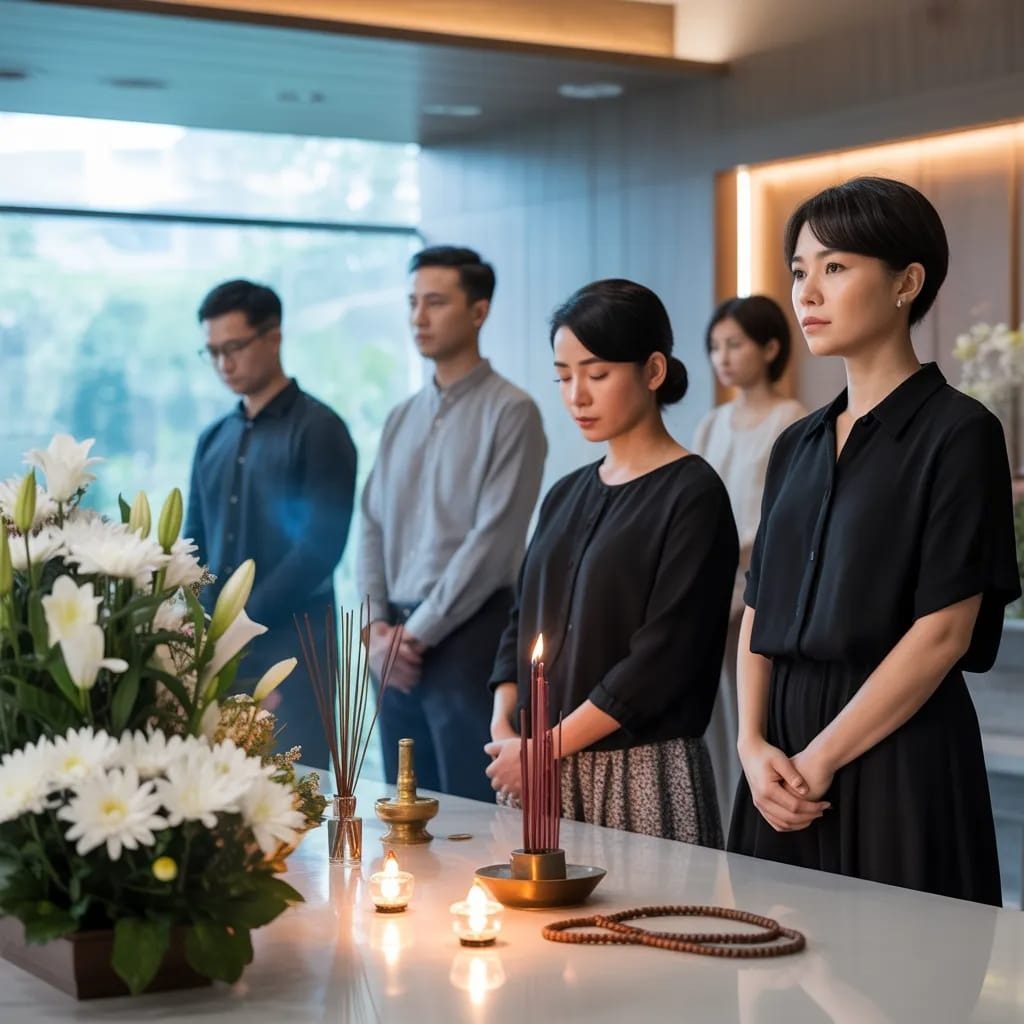
These run long. Three days is common, five is not unusual. Through the night there is chanting, incense burning, paper offerings being burned in a metal bin outside — paper money, paper clothes, paper versions of things the person used in life. Some families burn paper smartphones now. Sounds strange if you didn’t grow up with it. Makes complete sense if you did. Every element connects to specific beliefs about where the soul goes and what it needs to get there.
Malay Muslim Funerals
Completely different pace. Islamic practice is clear on this — burial should happen within 24 hours. The body is washed by family members, wrapped simply in white cloth, and buried without an elaborate ceremony. No multi-day wake, no decorations. The simplicity is the point. The focus stays entirely where it belongs — on returning the person to God without delay.
Hindu Funerals
Cremation is central here, understood as the soul leaving the body rather than the body being destroyed. Family members don’t just watch — they participate directly. Certain prayers, certain ritual activities conducted by those who loved the person whom they were remembering. It is meant to be interactive rather than passive.
Christian Funerals
More familiar to people who haven’t attended other traditions — prayers, hymns, a few people standing up to speak about the person who died. Sometimes someone shares a memory that makes the room laugh a little. That’s allowed. It’s part of grieving together, not a break from it.
The Funeral Process in Singapore
A practical picture of how things unfold:
Someone passes away at home. Family contacts a Singapore funeral service provider within hours. Next morning, the void deck is already set up — tent, chairs, flowers, the photograph at the front. It moves faster than most people expect.
For the following days, the provider handles the operational side entirely. Ritual timings, crematorium booking, body transport — all coordinated without the family having to chase anything. People come to pay their respects. Old friends, former colleagues, relatives who drove down from JB or flew in from further. The family receives them, sits with them, and grieves. That’s their job during this period. The logistics belong to the provider.
Last day, convoy to Mandai. Cremation. Ashes were collected a few hours later. Some families place them in a columbarium niche. Others scatter at sea through the NEA’s scheme.
The timeline depends entirely on religion. Muslim funerals — done within a day. Chinese ceremonies — three to five days typically. Hindu and Christian — usually one to three days, shaped by what the family wants.
Funeral Etiquette in Singapore
People tend to overthink this. A few straightforward things cover almost everything.
Dark clothing. Black is safest and works across every tradition here — Buddhist, Muslim, Hindu, Christian. Never wrong.
Phone on silent before walking in. Speak quietly. However, when dealing with the family, make sure that your message is short. “I am deeply sorry for your loss” will work just fine. This way, saying less might prove better than saying more.
Chinese wakes — bring a white envelope with cash inside. Called Pek Kim. Hand it at the reception table when you arrive. The amount is secondary. The act of bringing it is what matters.
If a chanting or prayer session is happening when you walk in, just stop at the side and wait. Two minutes, maybe three. Standing there quietly says more than any words would.
One specific thing about Chinese funerals — don’t wear white as a guest. White is worn by the bereaved family. It carries real cultural meaning. Showing up in white as a visitor creates genuine discomfort, even if completely unintentional. Stick to black.
Choosing the Right Funeral Service Provider
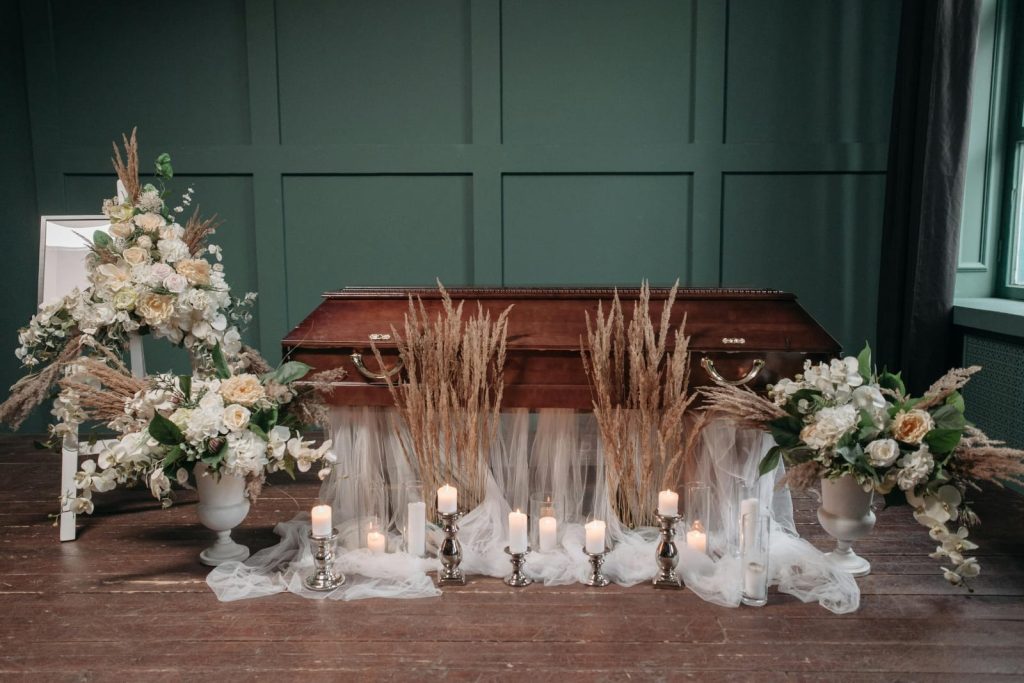
Families often have maybe two or three hours to make this call. Here’s what actually matters in that window.
Ask specifically about experience with your tradition. Not “do you handle Buddhist funerals” — ask how many they do regularly, whether their team knows the ritual details from practice. There are components that come about in these rituals only because of their frequent performance.
A detailed analysis of pricing should be asked for before any kind of commitment is made. The things included, the things not included, the implications of an extended wake. A straightforward provider gives straight answers. Vague responses to cost questions are a warning sign.
Standard packages generally cover: tent and seating setup, body preparation, coffin or urn, transportation, and coordination of the ceremony and cremation or burial. Flowers, catering, photography, and video tributes are usually separate.
If the situation allows even a brief comparison — two or three providers — it’s worth doing. Pricing differences can be significant. So can service quality.
Modern Trends in Funeral Services
A few real shifts have happened in recent years.
Live streaming stayed after COVID ended. Too many Singaporean families have members in Melbourne, London, Kuala Lumpur — people who can’t always get back on time. Watching a wake on a phone screen isn’t the same as being there. Families say it still matters.
Green options are being requested more often. Biodegradable Urns, Cremation with Lower Emissions, Natural Burial. Mainly coming from younger family members managing arrangements for an older generation. Providers are catching up to the demand.
Personalisation has changed the most. The old template — same structure, same flow regardless of who died — is fading. Families are playing the person’s favourite songs during the wake. Setting up photo displays that span an entire lifetime. Putting together short video tributes from family recordings. It doesn’t make things less serious. It makes the ceremony feel like it’s actually about that specific person.
FAQs
What is included in a funeral package in Singapore?
Common items: wake arrangement, body preparation, coffin/urn, transportation, and cremation/burial arrangement. Make sure you get the entire list of what is included – this can vary from service provider to service provider.
How expensive is a funeral in Singapore?
Typically, basic services begin at a few thousand dollars. More elaborate ones cost more. Comparison shopping is recommended.
What should I wear to a funeral in Singapore?
Wear black – it is suitable everywhere.
How long does a funeral last here?
Muslim funerals finish within 24 hours. Chinese ceremonies run three to five days. Hindu and Christian services are usually one to three days depending on the family.
Conclusion
A void deck funeral becomes part of the neighbourhood for a few days. Life moves around it — people walking past with groceries, kids on bikes going around the tent — and nobody needs it explained. Everyone knows.
That’s something specific to Singapore. Death isn’t hidden here. It happens where people live, in the open, and the community absorbs it quietly. The traditions — all of them, across every religion — carry the same basic understanding underneath the differences. That the person mattered. That the people left behind deserve real time to grieve. That goodbye is worth doing properly.
Whether arranging or attending, the foundation is the same. Respect, genuinely meant. Everything else follows from that.